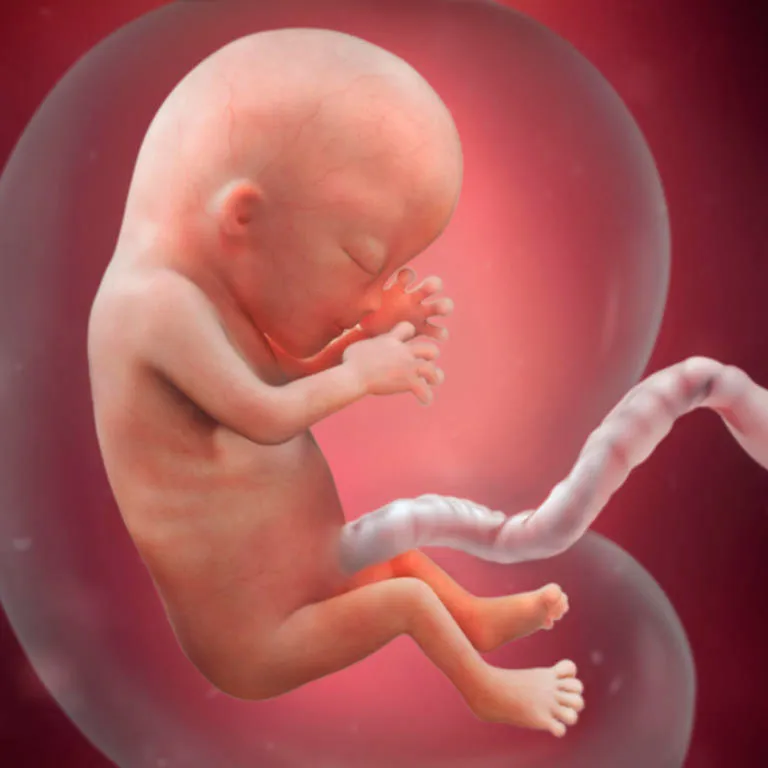
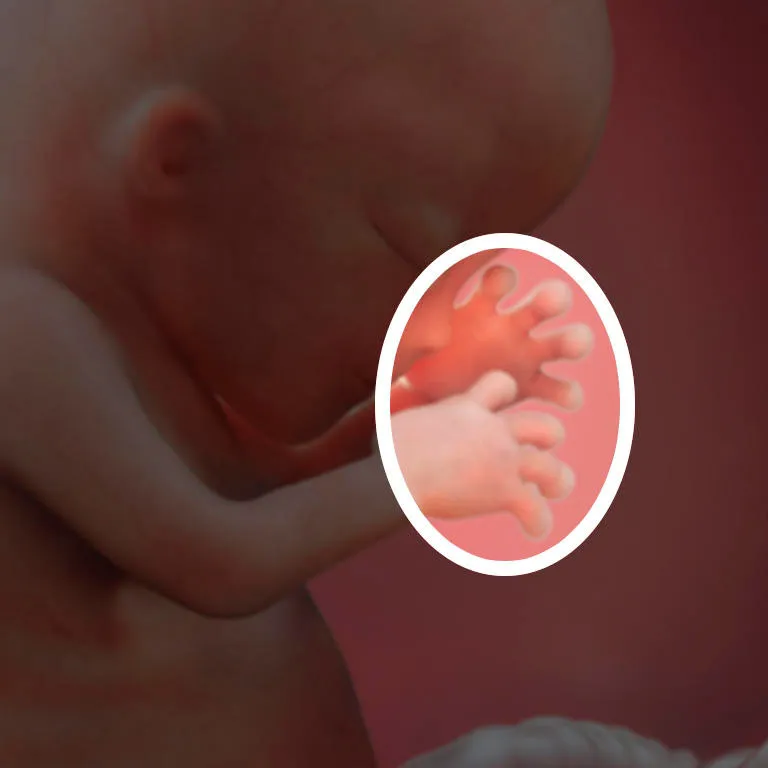
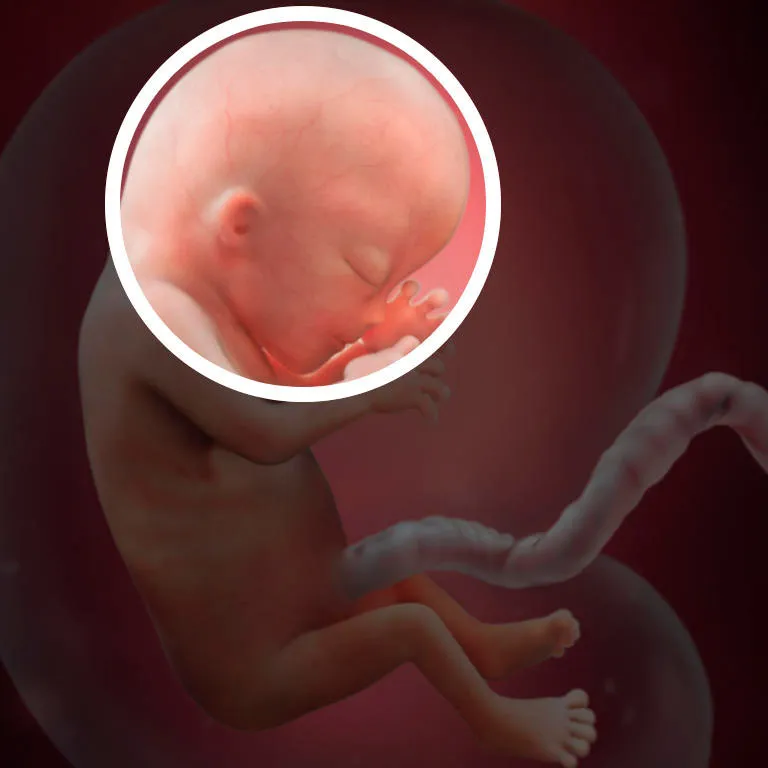
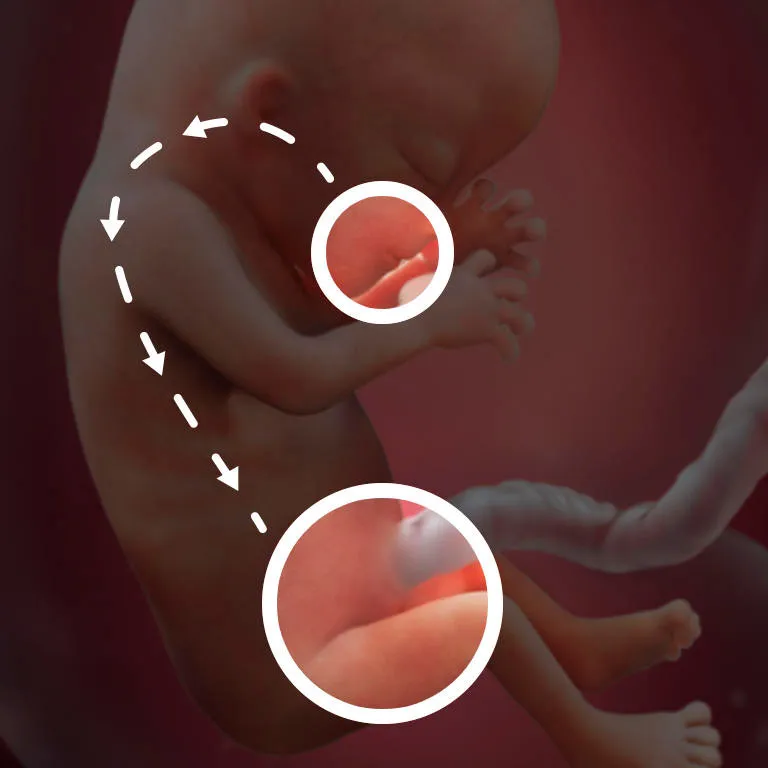
Fingerprints are forming. Vocal cords are developing.
The second trimester is beginning. You may feel much better.
By the 13th week of pregnancy, the first trimester — along with its worries and risks — is coming to an end, as well as the initial screening and medical registration. This stage is considered one of the calmer periods of pregnancy — the perfect time for pleasant daydreams, imagining your future baby, and updating your wardrobe.
However, feeling well is not a reason to completely relax. On the contrary, this is the right moment to prevent swelling, constipation, and other unpleasant conditions.
What happens at 13 weeks of pregnancy
Fortunately, the expectant mother’s hormonal balance begins to stabilize. A woman feels that frequent mood swings gradually fade away, and many previous worries start to seem insignificant. Nausea disappears, appetite improves, and frequent urination no longer causes discomfort.
The uterus continues to grow and by this time moves into the abdominal cavity. As a result, internal organs begin to shift slightly, which may cause shortness of breath and heartburn. After long walks, heaviness may appear in the arms and legs, and fatigue may be felt more strongly than before. Therefore, it is important to walk at a relaxed pace, properly plan rest time, and avoid overexertion.
Increased uterine tone is a reason to consult a doctor. If you regularly feel tension in the abdomen, seek medical advice. If the abdomen suddenly feels “hard,” you should immediately lie down and stop any physical activity.
Condition of the fetus at 13 weeks of pregnancy
The baby is growing literally by the hour. At 13 weeks, the fetus is about 7–8 cm long and weighs around 20 grams. In size, the baby can be compared to a small peach.
At this stage, the foundations of all baby teeth have already been laid — they only need to erupt later. The baby’s pancreas has learned to produce insulin. The body begins to grow rapidly, and soon the head will no longer appear disproportionately large. Although the fetus is still small, its movements at this stage become almost constant. This activity is essential for the normal development of muscles and limbs. The baby rests only during short periods of sleep.
During this time, bone tissue and muscles continue to form. Important changes also take place in the digestive system: villi appear in the small intestine, which are responsible for digestion. At 13 weeks, the vocal apparatus begins to form, and facial features start to take on a more defined appearance.
Mood and pregnancy grow “in parallel”
At this stage, some women find it difficult to hide their pregnancy. Although the abdomen may not yet be very noticeable at 13 weeks, changing clothes and giving up high heels often reveal the situation.
If during the first trimester the expectant mother was afraid to reveal her pregnancy due to superstitions or fears, these worries now decrease significantly. A good mood appears, self-confidence increases, and openness grows. A sense of deep satisfaction and inner harmony begins to surround the woman.
Sweets and baked goods — in moderation
Once toxicosis disappears, the desire to eat almost everything may arise. However, it is essential to control your diet, otherwise excess weight may be gained too early, which can lead to complications.
Sweets, baked goods, salty and fried foods should be consumed in very limited amounts. After toxicosis, heartburn may sometimes take its place, making dietary control not just recommended but necessary.
Whole-grain bread, cottage cheese, fruits and vegetables, grains, and lean meat should form the foundation of your daily diet.
Ultrasound at 13 weeks of pregnancy
If you have already undergone screening and completed the main tests before registering for prenatal care, then before visiting your doctor, you will usually only need to submit a general urine test.
As a rule, a vaginal smear is taken by a dermatovenerologist at 12 weeks of pregnancy, although sometimes it may be postponed for one week. This procedure is safe and painless and helps assess the condition of the vaginal microflora and detect the presence of sexually transmitted infections.
Sensations at 13 weeks of pregnancy
The breasts may remain sensitive and continue to increase in size. To relieve the feeling of tightness, you may need to change your everyday underwear, as it may start to feel too small. Colostrum (nipple discharge) may appear as early as the 13th week of pregnancy — this is normal and should not cause concern.
Pigmentation may appear: light brown spots on the face, darkening around the nipples, and a dark line from the navel to the pubic area. All of these changes are related to hormonal fluctuations and will disappear after childbirth.
Now is the perfect time to purchase trousers with an elastic insert for the abdomen — you will feel more comfortable and look attractive in them. One of the most pleasant stages of pregnancy has begun — the second trimester.


Comments (0)
There are no comments yet. Be the first to comment!
Log in to leave a comment.
Login