All 5 senses are working.
Colostrum may leak from the breasts.
Childbirth is getting closer. The baby is growing day by day, gaining weight and acquiring new habits. The mother feels certain discomfort, her walking becomes heavier, and breathing is more difficult. The baby is taking up more and more space and sending a clear signal!
Pregnancy week 31 – baby’s weight
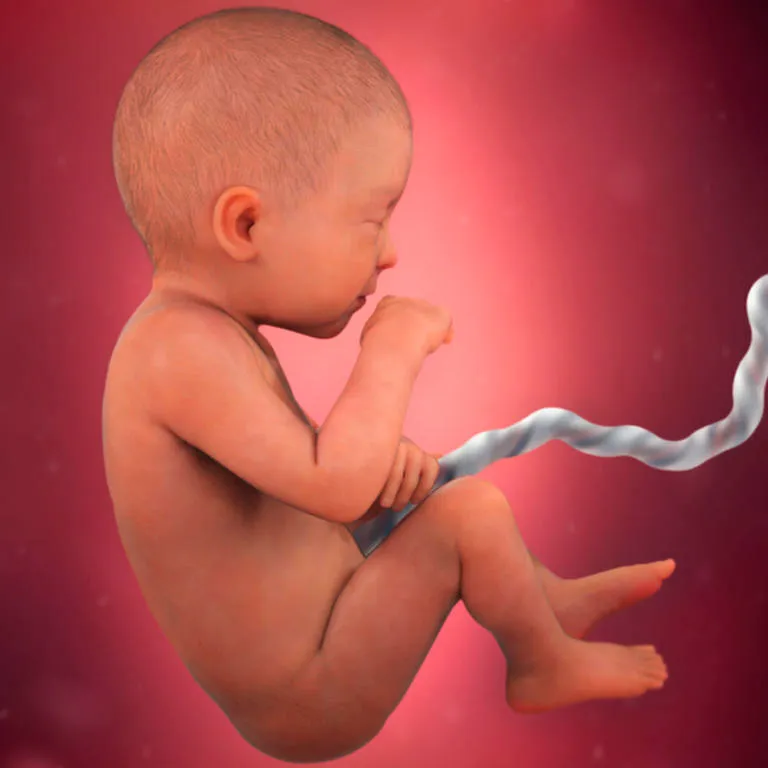
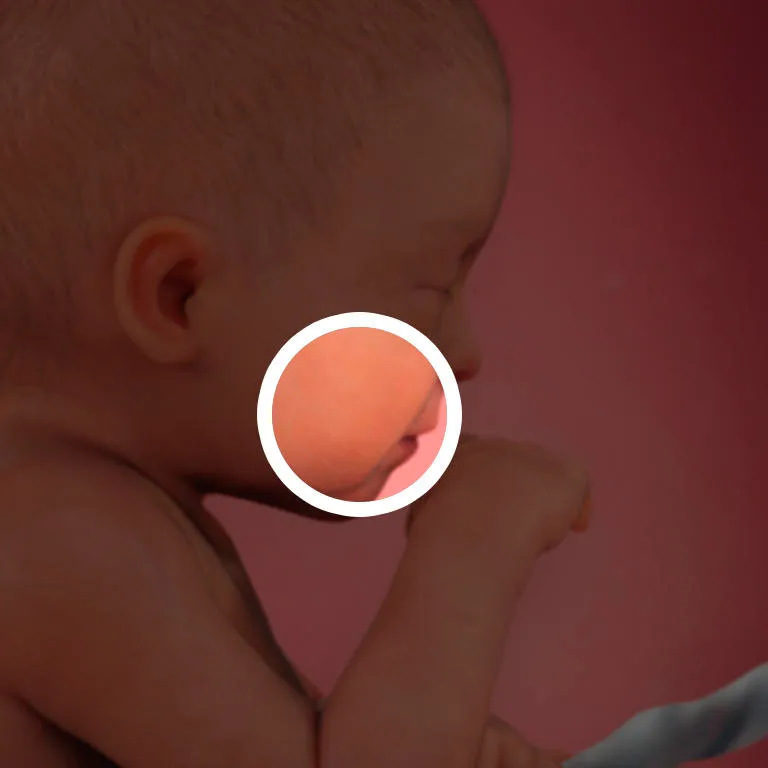
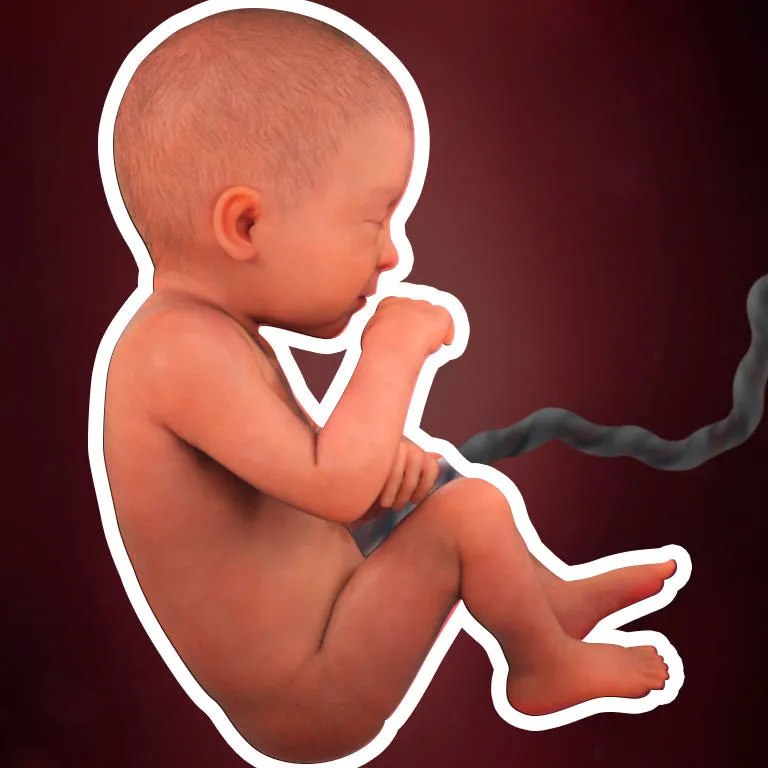
Just like in fairy tales, growth happens not by days but by hours. The baby is actively gaining muscle mass, and at 31 weeks of pregnancy the baby’s weight reaches 1.5–1.6 kg, with a length of 39–42 cm. The baby has learned to suck a finger!
The baby’s brain continues to develop actively, protective sheaths form around nerve fibers, allowing impulses to be transmitted much faster. Another important change is that the baby is now capable of learning. From this week on, the baby’s pupils are almost like those of an adult; the fetus is sensitive to light and darkness, white fatty tissue forms under the skin, and the baby’s skin tone gradually becomes pinkish, similar to what we see in newborns.
Your baby can now feel pain. If you accidentally press on your belly harder than usual, you will immediately feel the baby’s response — the baby starts moving in protest. Sharp sounds cause a startle reaction, meaning that from week 31 the baby’s sensitivity to external signals increases. At 31 weeks of pregnancy, the baby hears the mother’s voice well and understands lullabies sung to him.
Pregnancy week 31 – movements
At this stage, the baby still occasionally makes chaotic movements with arms and legs, as before, but the kicks have become much stronger. By watching the belly, the mother can clearly observe that “life is boiling” inside.
At 31 weeks, the baby’s characteristic movements include motions necessary for the development of arm and leg muscles, jerks caused by sudden sounds or fright, rhythmic movements during hiccups, and occasional pushes.
What if the baby were born now…
At first glance, only seven days have passed since the previous week. But during this time your baby has changed significantly and is no longer the same tiny one as a week ago.
Day by day, the baby’s lung tissue is maturing. In the alveolar sacs, epithelial cells producing a special substance called surfactant have formed. This substance allows a newborn to expand the lungs and take the first independent breath.
Do you understand the difference? At 30 weeks, none of this existed. If a baby is born at 31 weeks of pregnancy, the chances of survival are already quite substantial.
Self-sufficient insulin production
The number of pancreatic cells increases, and its mass grows. The pancreas is almost ready to produce enzymes for breaking down proteins, fats, and carbohydrates, although this will happen after birth.
For now, the pancreas independently supplies the baby’s body with insulin, maintaining normal blood sugar levels.
The liver continues to mature: at this stage, the formation of lobules responsible for detoxifying the blood is being completed. The baby’s kidneys are already functioning well and continue to excrete urine into the amniotic fluid.
How the mother feels
You have gained about 8.6 kilograms. This weight consists of the baby, placenta, amniotic fluid, enlarged uterus, and increased blood volume. The belly continues to grow. The uterus has risen higher and is now located 11 cm above the navel and 31 cm above the pubic symphysis.
As the baby grows rapidly and demands more space in the abdominal cavity, do not be surprised by discomfort in the chest or pelvic area. The enlarging uterus shifts internal organs from their usual positions, causing some functional difficulties, especially in the stomach, which leads to heartburn.
Beware of overeating!
Pregnancy at 31–32 weeks is a time when cravings for sweets become constant. Many women may develop a desire to combine foods that normally do not go together at all. You might want to eat cutlets with sweet pastries, pickles with strong coffee, drink very sweet juice with salted fish, and other unusual combinations. Pregnant women can crave almost anything!
Of course, eating a variety of foods is beneficial for the baby. But do not forget about excess weight. At this stage, extra kilograms tend to accumulate where they are not needed. The body is already under significant strain due to pregnancy, and overeating only increases this burden. That is why doctors recommend proper, fractional meals — eating small portions several times a day. Ideally, you should eat about six times a day. Otherwise, excess weight may lead to complications and swelling.
Problems at 31 weeks of pregnancy
Shortness of breath and lower back pain are common issues at 31 weeks. This is normal. As the body prepares for childbirth, the lower back, figuratively speaking, goes on “vacation.” Its muscles and ligaments are relaxed to fully participate in the upcoming labor process.
At this stage, the likelihood of visible veins appearing on the legs increases. Remember that compression underwear can be very helpful.
Also, at 31 weeks of pregnancy, the body actively produces relaxin — a hormone that causes the pelvic joints to loosen. The pelvic ring becomes more flexible and elastic.
The body is getting closer and closer to the long-awaited main event. Your gait may still resemble a “duck walk,” but this is temporary — after childbirth, everything will return to normal.
Blood pressure. Weight. Swelling
At this stage, acceptable weight gain should not exceed 300 grams per week. Normal blood pressure is 120/70 mmHg. By week 31, a pregnant woman’s immune defenses are weakened, and oral thrush may appear.
The kidneys may not fully cope with fluid processing and salt excretion, which can lead to swelling in the arms and legs.
To prevent this, follow these recommendations: when sitting, keep your legs slightly elevated if possible; shoes and clothing should not be tight; limit salt intake; drink at least 1.5 liters of water per day; regularly take urine tests; and wear compression tights or stockings.


Comments (0)
There are no comments yet. Be the first to comment!
Log in to leave a comment.
Login