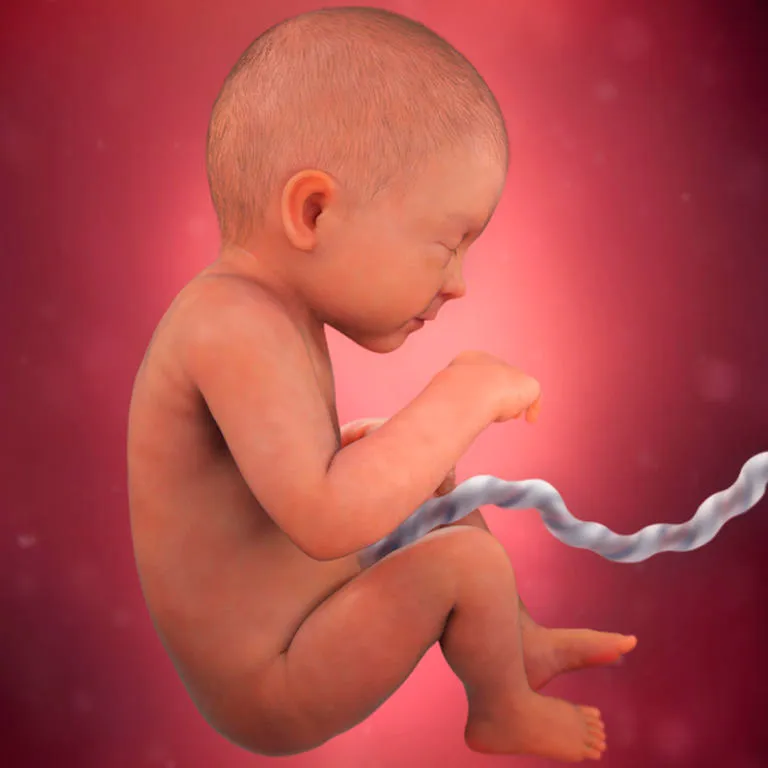
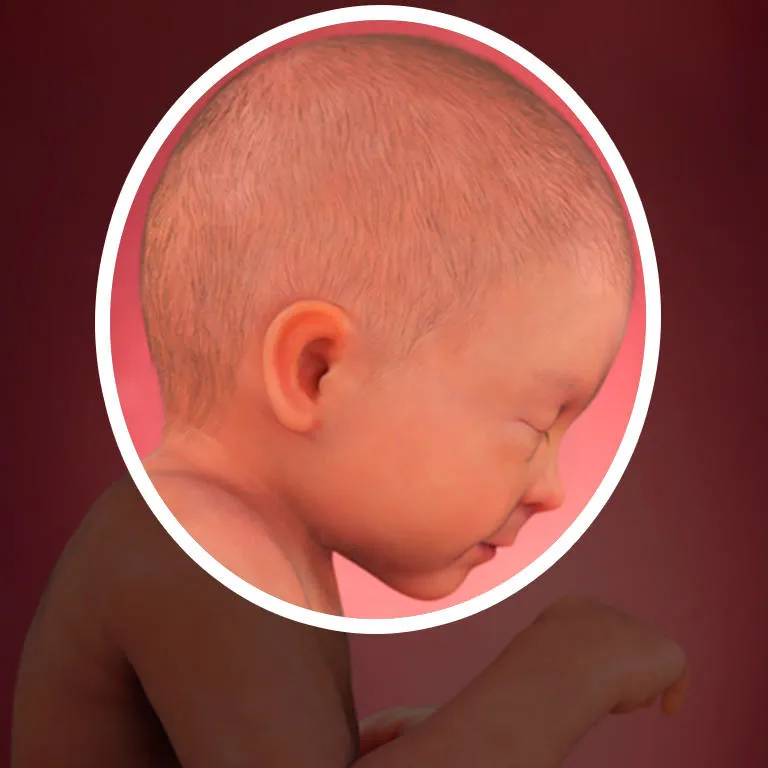
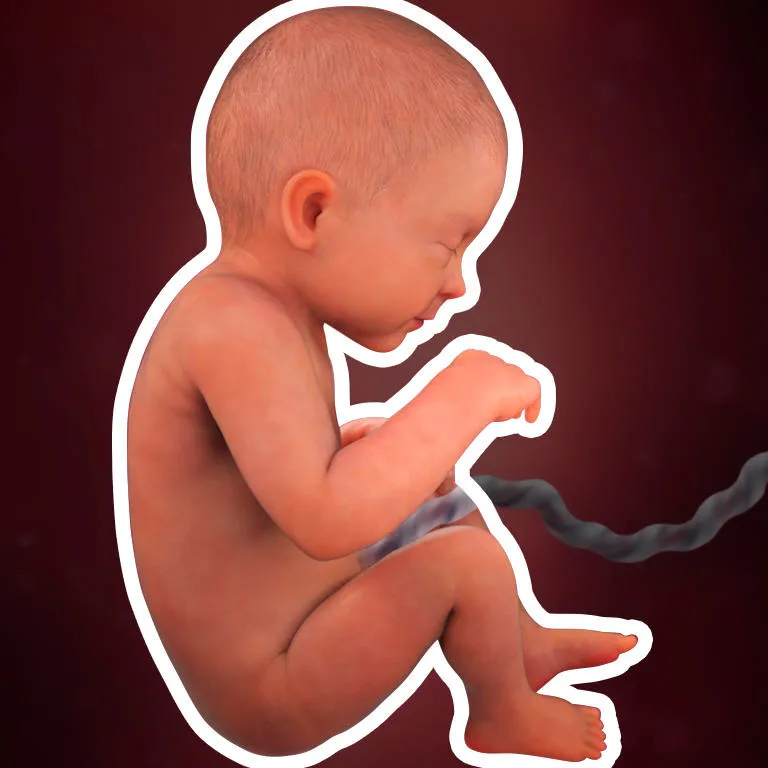
Bones are hardening, but the skull is still soft.
Swelling in hands and feet may appear.
Everything is going well. The 33rd week of pregnancy has arrived. The mother’s anemia has resolved, the baby has grown another centimeter, and the space inside the womb is becoming tighter. The baby has begun to dream. Perhaps this is also why, in the thirty-third week, the mother may start seeing bright and cheerful “cartoon-like” dreams herself.
Pregnancy week 33 – baby’s weight
At 33–34 weeks of pregnancy, a baby close to full term grows to about 42–44 cm in length. At 33 weeks, a normally developing baby weighs around two kilograms. The baby sleeps a lot (babies grow while sleeping!), and during the rapid eye movement phase of sleep, the pupils move.
The baby’s heart continues to mature; however, there is still a tiny opening between the chambers of the heart. This opening closes immediately after birth, within the first seconds of the baby’s first breath.
Taste buds have formed on the tongue. Your baby can already easily distinguish sour from sweet.
Pregnancy week 33 – movements
The formation of the endocrine, nervous, and immune systems is in its final stage. Body proportions are becoming more harmonious. The baby continues to accumulate subcutaneous fat; wrinkles on the face gradually smooth out, and the cheeks become rounder. However, the layer of fat tissue is still relatively thin, which is why babies born prematurely may have difficulty retaining body heat. Such babies are kept warm in incubators or with heating devices.
By the 33rd week of pregnancy, the activity of fetal movements inside the womb decreases. The baby actively absorbs nutrients from the mother and continues to gain weight. Turning and rolling over becomes increasingly difficult. The days when the baby could easily spin around and freely wave arms and legs are gradually coming to an end. Now, the baby’s increased body mass and the reduced space due to the placenta limit free movement. Every movement requires effort.
A great learner
Although not yet born, the baby has already begun trying to understand the world, and this process continues. Nerve cells in the brain are actively forming connections with one another.
Even though motor reactions are not yet fully coordinated, your future little explorer is already laying the foundation in their own “database” for how to kick, run, and later ask millions of questions a day. The formation of nerve centers responsible for controlling vital functions is progressing intensively.
Other internal organs are also reaching their highest level of readiness. Blood vessel walls are thickening, their tone is increasing, the formation of alveoli in the lungs is nearing completion, the kidneys are filtering blood and excreting waste, and the brain is fully formed.
The fingers on the hands and feet are now covered with unique skin patterns — fingerprints.
How the mother feels
The belly continues to grow. Painful sensations in the pelvis or chest may still be bothersome, as before. The good news is that you can now tell whether the baby is pushing with a knee or an elbow.
The uterus continues to rise upward: at this stage, it is located 13 cm above the navel and 33 cm above the pubic symphysis. Weight gain ranges from 9.9 to 12.6 kg. The number of red blood cells begins to match the plasma volume, and anemia recedes. However, another issue appears: frequent urination. The enlarged uterus presses on nearby organs, especially the bladder, forcing the expectant mother to use the restroom 5–6 times per night.
By week 33, the volume of amniotic fluid stabilizes and remains unchanged until childbirth.
Symptoms
Possible symptoms at this stage include constipation, digestive disturbances, bleeding gums, a feeling of blocked ears, headaches, lower back pain, varicose veins, cramps in the arms and legs, and leakage of colostrum.
It is important to note that these symptoms may occur, but they are not guaranteed.
Light internal rhythmic jerks may indicate that the baby has hiccups. This is a natural process and should not cause concern.
Blood mixed with colostrum
By the 33rd week of pregnancy, a woman’s body contains about one liter more blood than usual. In total, the circulatory system must handle approximately 5–5.5 liters of blood.
The mother’s body is actively preparing for childbirth and lactation: placental hormones begin to strongly stimulate milk production.
The doctor carefully monitors the condition of the umbilical cord and placenta — very little time remains before delivery.
Three breakfasts, three lunches
If appetite is reduced, food intake should be increased thoughtfully. Plan your diet in a way that prevents overeating and unpleasant consequences. Your breakfasts and lunches should bring comfort and enjoyment, not discomfort or problems.
Many pregnant women share from experience that it is better to divide a “large” lunch into two or three smaller portions. As a result, you may eat six to seven times a day in small amounts. This helps prevent hunger and avoids a heavy feeling in the stomach.
Proper nutrition and a positive mood, along with reading specialized or fiction books, bring into your life those very feelings of “motherhood,” tenderness, and emotional calm — feelings that will now stay with you forever.


Comments (0)
There are no comments yet. Be the first to comment!
Log in to leave a comment.
Login