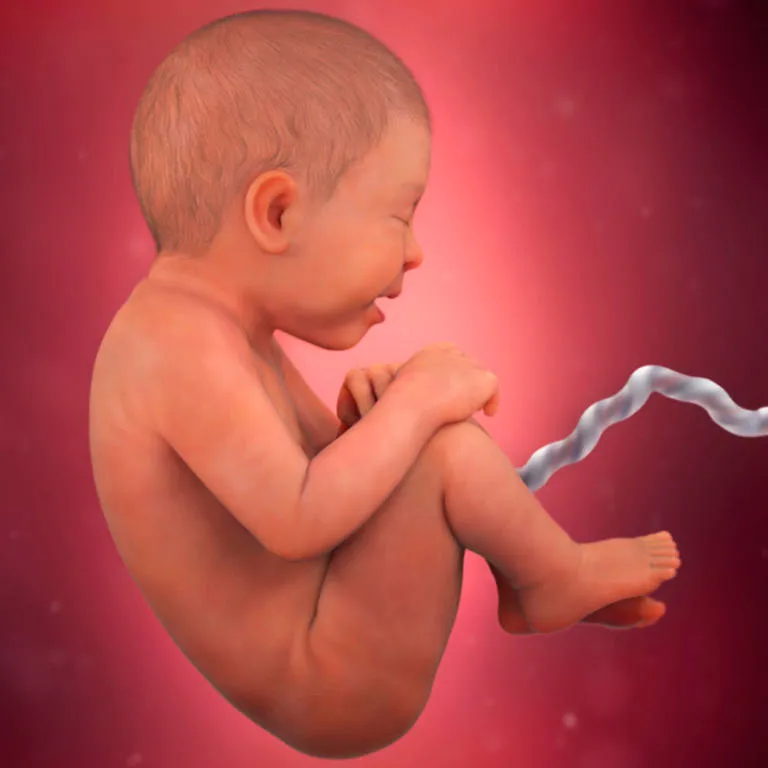
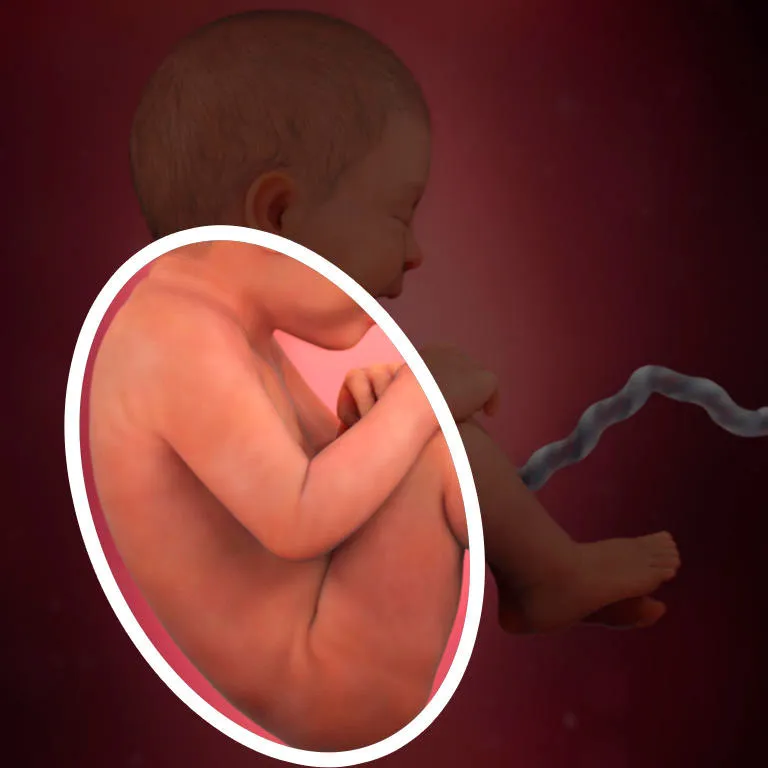
The baby begins to descend into the birth canal (head down).
The belly may drop, making breathing easier.
You will visit your doctor more often than usual, and the condition of the placenta will be carefully monitored. You, your family, and your doctor are essentially left with one main task — waiting.
Your hospital bag is already packed, you continue preparing for childbirth, read good literature, and enjoy warm conversations with mothers who have recently given birth.
Pregnancy Week 36 – Baby’s Weight
If the pregnancy has progressed normally and there has been no low amniotic fluid, then at 36 weeks the baby’s weight is usually within the normal range and there is no risk of the baby being underweight.
Your “little guest in the womb,” with a length of 46–48 cm and a weight of 2.6–2.8 kg, is moving less and less: there is not enough space to turn around, and the uterus has become tight. However, you should still feel the baby’s movements.
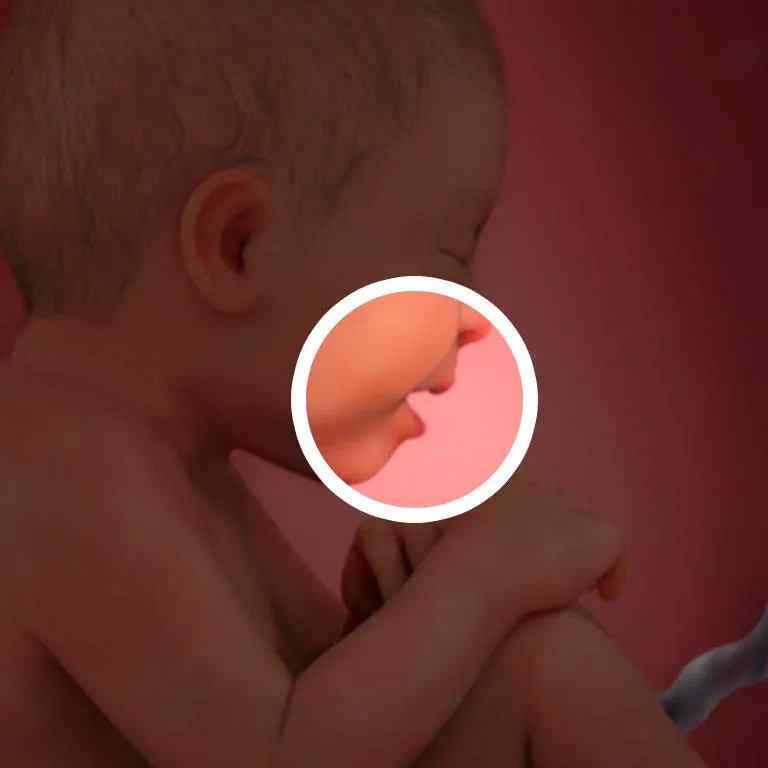
The baby’s cheeks have become plumper due to frequent thumb-sucking — this is preparation for feeding after birth. Of course! After birth, feeding will no longer be as effortless as it was in the womb. In addition to sucking, your baby is also practicing swallowing and breathing movements.
The tiny heart is fully formed, and the nervous, immune, and endocrine systems are almost ready to function — they only need a bit more “maturing.” The baby continues to receive the necessary amount of oxygen through the umbilical cord.
How the Mother Feels
By 36 weeks, the optimal total weight gain is about 12 kg. If you have gained a little more, there is nothing to worry about — after childbirth, you will be able to lose the excess weight quite easily. The uterus has reached its highest position: 14–15 cm above the navel and 36 cm above the pubic symphysis.
At times, it may feel as if the baby is kicking right under your heart, but this sensation will not last long. Between weeks 36 and 37, the baby’s head begins moving toward the pelvic area, which makes breathing easier for the mother. However, in some cases the baby’s head may not move down yet. Mothers who are not giving birth for the first time may experience shortness of breath right up until delivery.
Stretching of the bones may cause pain in the pelvic area, and pressure from the uterus on internal organs may lead to more frequent urination and bowel movements. At this stage, the cervix begins to soften and shorten, and the body is actively preparing for the upcoming birth. Some babies are in a hurry, and many are born slightly earlier than expected — giving birth at 36 weeks is not a rare occurrence.
Pregnancy Week 36. If back pain appears, pay attention to how long it lasts. If you feel pulling pain in the abdomen, note its frequency and duration. But if at 36 weeks you experience all of these symptoms at once — a hard belly, pulling pain in the back, and aching pain in the lower abdomen — be sure to contact your obstetrician-gynecologist. This may be uterine hypertonus and a sign that labor is not far away.
Giving Birth at 36 Weeks
Week 36 signals that childbirth is approaching. At this time, many mothers begin checking the baby’s things — whether everything has been purchased and what might still be missing. Make a list of items you will need at the maternity hospital, or, if your hospital bag is already packed, carefully review its contents once again.
Visit your doctor once a week and try to limit going out, so as not to risk the health of both yourself and your baby. It is better to stay at home, because if labor begins early, your doctor should not have to look for you elsewhere.
If Getting Up Is Difficult
Sometimes, in the mornings, getting out of bed becomes a real challenge for a pregnant woman. At 36 weeks, this task can be especially difficult. If you experience this problem, avoid sudden movements. First, turn onto your side, then lower your legs from the bed, and only after that slowly stand up.
Even if you love high-heeled shoes, it is advisable to avoid them at this time. Right now, you are living not for decoration, but for your baby. By doing so, you make childbirth easier for yourself. There is no need to complicate things.
Classes for expectant mothers and preparing for the baby’s birth — this is what your life consists of now.


Comments (0)
There are no comments yet. Be the first to comment!
Log in to leave a comment.
Login