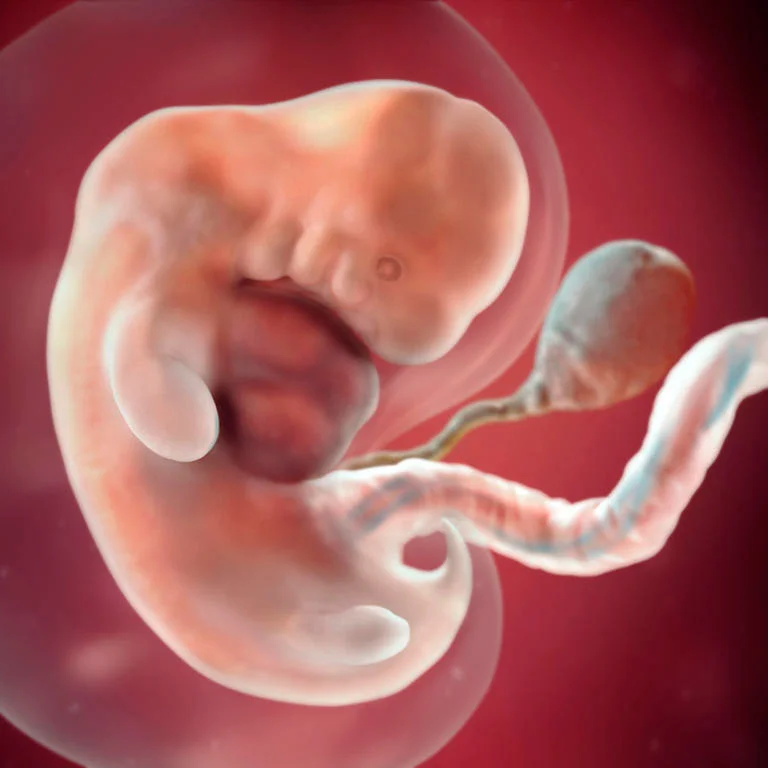
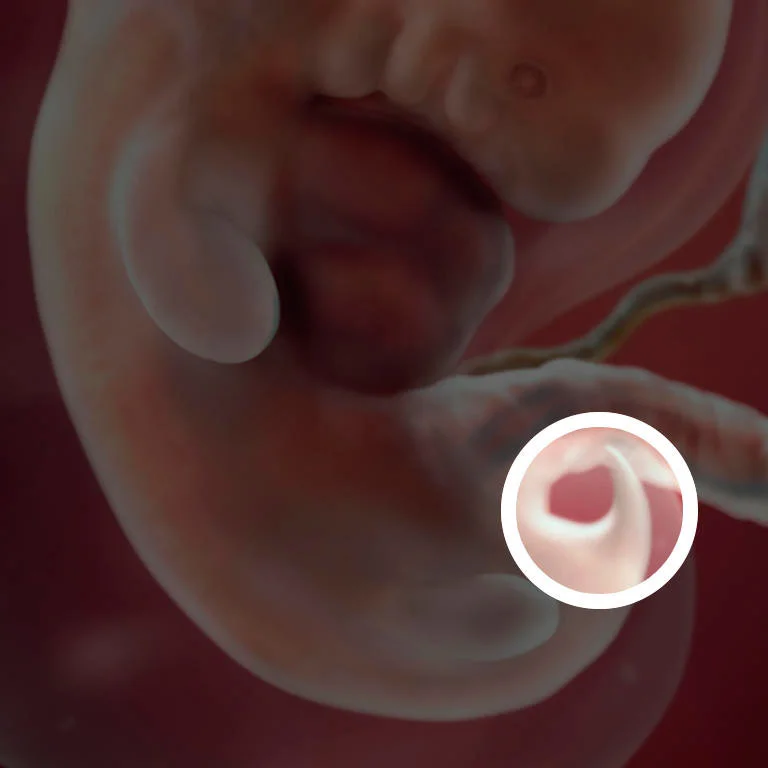
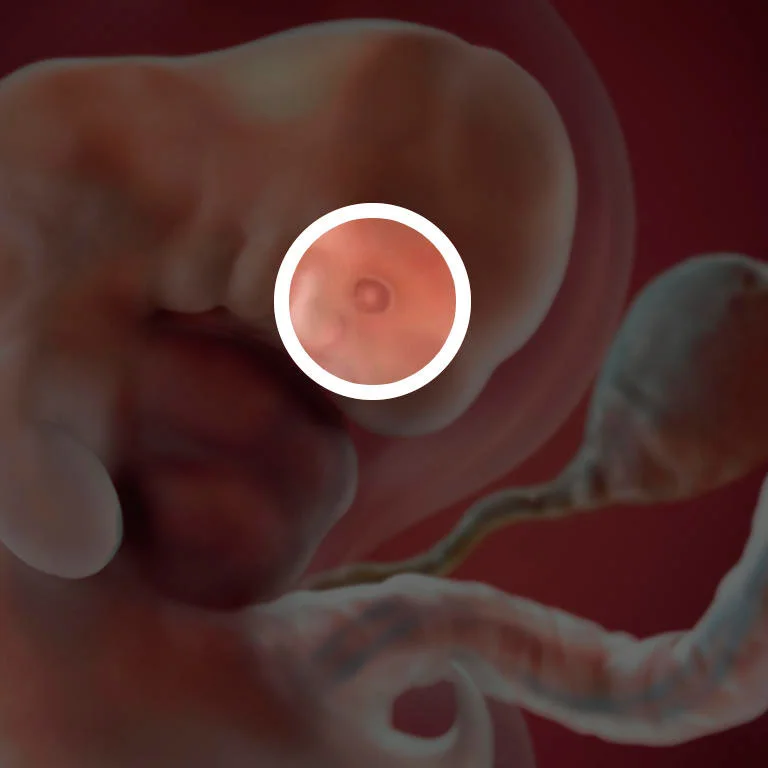
Fingers and toes begin to form. The brain is developing rapidly.
The uterus is enlarging, which can press on the bladder and lead to frequent urination.
The 7th week of pregnancy corresponds to the fifth week after conception and the third week since menstruation stopped. When calculated by months, it falls into the second half of the second month. During this period, restructuring processes take place in the body, the hormonal background changes, and the signs of pregnancy become more pronounced. Many women experience toxicosis, general fatigue, and weakness, although for some fortunate women these symptoms are completely absent. Nevertheless, from this moment on, changes in a woman’s body become truly noticeable — this is an undeniable fact.
The 7th week of pregnancy: sensations
As mentioned above, at this stage it is almost impossible to avoid toxicosis. It is precisely because of this that eating habits change: sometimes appetite disappears completely, while at other times a woman may feel like eating everything in sight. A typical condition during the 7th week of pregnancy is lethargy and drowsiness. This is mainly caused by hormones — more specifically, their fluctuations and changes in balance. Despite these sensations and changes, pregnancy itself may still go unnoticed by others from the outside.
This period also brings many “unexpected surprises.” Some pregnant women develop a strong appetite for foods they previously did not like. Others become eager to learn new things, develop an interest in art, or feel a desire to travel. In general, the seventh week of pregnancy reveals many of its wonders.
What happens during the 7th week of pregnancy
During the 7th week of pregnancy, all typical signs and symptoms of pregnancy appear, although people around the woman may not yet notice them. In particular, frequent mood swings, nausea, and loss of appetite may occur, slightly clouding the joy of pregnancy. However, many do not realize that during this time a woman’s appearance changes and she becomes especially beautiful. A sparkle appears in her eyes — a mysterious glow known only to her.
Because nutrients, minerals, and vitamins are also being used to nourish the baby, a woman’s skin and hair condition may worsen. Hormones can contribute to the development of chloasma (skin pigmentation) in pregnant women. Therefore, proper nutrition is extremely important, and vitamin–mineral supplements should be taken if necessary. Folic acid plays a particularly important role at this stage, as it is essential for the development of the baby’s nervous system.
Symptoms of the 7th week of pregnancy
It is well known that every pregnancy is unique, but despite this, many symptoms of the 7th week are common to most expectant mothers. The breasts enlarge, increasing by approximately one cup size. One possible downside is the appearance of tenderness or pain. Due to hormonal changes, fatty tissues are redistributed, and a woman’s body shape gradually becomes more rounded.
The vaginal epithelium renews itself more frequently, and blood supply increases. As a result, during the 7th week of pregnancy, discharge may appear with a faint odor and a slightly yellowish color. This is a normal and natural condition. However, if abdominal pain occurs periodically and is accompanied by bloody mucus discharge, it is necessary to consult a gynecologist, as this may be a symptom of uterine hypertonicity.
What is the baby like at this stage?
The 7th week of pregnancy marks the beginning of the embryofetal period and the end of the purely embryonic stage. From this moment on, the baby is referred to as a fetus. It already resembles a tiny human with all basic shapes and organs, although the nervous and endocrine systems still require further maturation. The brain continues to develop actively.
By the end of the week, a genital tubercle forms, from which the baby’s reproductive organs will later develop. Although gill-like structures have completely disappeared, a small tail is still present. The fetus’s posture becomes more upright, and the area where the neck will form can be distinguished. At this stage, the arms and legs are clearly visible, although the fingers have not yet separated. The legs grow slightly more slowly than the arms.
Facial features also begin to form during this period. The mouth becomes clearly visible, the nostrils are defined, and the jaws take shape. By the end of the 7th week, the fetus measures approximately 5–13 mm in length and weighs about 0.8 grams. The baby’s sex cannot yet be determined by ultrasound, although it may be possible using other methods.
Essential examinations
All essential examinations are carried out when the expectant mother first visits a prenatal clinic. Pelvic measurements and body weight are taken, and a smear is collected to test for infections. At this stage, an examination using a gynecological chair is usually not performed.
The gynecologist provides referrals for urine and blood tests, as well as blood tests for HIV, hepatitis, and RW (syphilis). Visits to a general physician and a dentist are mandatory. Ultrasound during the 7th week of pregnancy is rarely prescribed, but it may be used to confirm and document multiple pregnancies.
What should be avoided
As mentioned above, the risk of miscarriage remains high at this stage. Due to emerging toxicosis, a woman may feel somewhat uncomfortable. At such an early stage, the fetus is also quite vulnerable, as serious developmental abnormalities can form during this period. To minimize risks, it is essential to strictly follow the doctor’s recommendations.
It is important to remember that during pregnancy, the use of narcotic substances, alcohol, and medications is prohibited, and smoking must also be avoided. All of these can have negative effects on the baby. Infection and self-medication should be avoided.
The seventh week of pregnancy is a crucial time to register at a prenatal clinic and to follow the instructions of the attending physician carefully.


Comments (0)
There are no comments yet. Be the first to comment!
Log in to leave a comment.
Login